
For eCommerce brands, sourcing efficient and cost-effective packaging materials is a top priority. Packaging wholesalers operate in full skid quantities and are optimized to move skids within their facilities. While wholesalers often have the capacity to ship a few cartons, eCommerce shippers pay a premium for that added service. Shipping a handful of cartons via UPS is costly. Paper based packaging is heavy, bulky, and the materials inside those cartons are low value.
Whether you’re a manufacturer, retailer, or wholesaler, the method you choose for shipping your products can significantly impact your bottom line and your environmental footprint. In this blog post, we’ll explore the importance of shipping skids as opposed to smaller increments. We’ll delve into the cost savings, environmental benefits, and ease of packaging and transportation that make this approach a smart choice, particularly for businesses using custom shipping packaging to ship their merchandise.
1. Cost Savings: The Bottom Line Advantage
One of the most compelling reasons to order full skids of packaging materials is the significant cost savings it can bring to your business. While it may seem more economical to order in smaller increments, especially for smaller businesses, the reality is that bulk shipping can translate to substantial financial benefits in the long run.
Simple math – If a single 9 x 12 paperboard mailer costs $0.50 each, a full carton of 100 mailers costs $50. Packed in a 9 x 9 x 12 carton weighing 14 lbs, a single carton, UPS Ground will charge$25 to deliver a carton. That works out to a freight cost of $0.25 per mailer, plus the cost of the mailer itself for a total of $0.75 per mailer.
If a company orders 2,000 mailers a month, they would be paying $500 per month for UPS delivery.
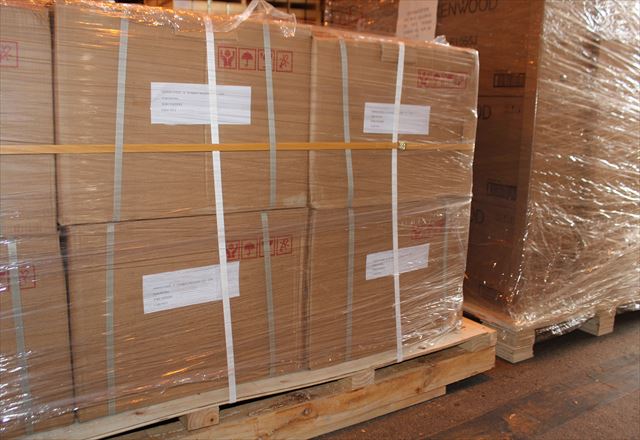
Let’s contrast that with ordering a full skid – 84 cartons of 100 mailers per carton for a total of 8,400 mailers. A full skid of mailers will cost approximately $400 to ship at a rate of $0.047 per mailer. In addition to the lower freight rate, the per unit price of the mailers will also be significantly lower to the order volume. This saves you money on all fronts.
a. Reduced Shipping Costs
Shipping a skid of goods allows you to take advantage of economies of scale. Freight carriers shipping LTL (Less than Trailer Load) are dramatically less expensive than FedEx Ground and UPS Ground. UPS and FedEx offer no discount on multiple cartons. If you ship one carton, the cost is $25. A second carton is another $25. 10 cartons will cost $250. With LTL Freight, generally speaking, a full skid has one price. A second skid is delivered at a significantly lower rate than the first skid.. By consolidating your products into skid load shipments, you’ll pay less for each item’s transit.
b. Lower Handling Costs
Smaller shipments typically involve more handling, which can lead to additional labor costs and increased risk of damage. When you ship in bulk on a skid, there’s less need for sorting and handling individual packages, reducing the risk of product damage and saving on labor expenses.
c. Minimal Packaging Costs
Custom packaging designed for skid shipments are often more cost-effective than individual packaging for each product. These specialized packaging solutions not only protect your products but also streamline the packing process, further reducing your expenses.
2. Environmental Benefits: A Greener Approach
In an era of heightened environmental awareness, businesses are increasingly looking for ways to reduce their carbon footprint and contribute to sustainability efforts. Shipping a skid of goods aligns with these goals by offering several environmental benefits.
a. Fewer Shipments, Lower Emissions
When you ship in smaller increments, you typically require more shipments to reach the same volume of goods. This means more trucks on the road, more fuel consumption, and higher greenhouse gas emissions. By consolidating your shipments into skids, you reduce the number of trips required, minimizing your carbon footprint.
b. Efficient Use of Resources
Shipping skids of goods is not only environmentally responsible but also resource-efficient. It maximizes the use of transportation and packaging materials, reducing waste and conserving valuable resources.
3. Easier Packaging and Transportation: Streamlining Operations
From a logistical standpoint, shipping skids of goods offers distinct advantages that can streamline your business operations.
a. Reduced Risk of Damage
Smaller shipments are more susceptible to lost or crushed cartons during transit. Skid shipments are typically more stable and less prone to mishandling, resulting in fewer damaged products and reduced replacement costs.
b. Efficient Warehousing
Skids are space-efficient and can be easily stored in warehouses, allowing for efficient inventory management. This minimizes storage costs and ensures that your products are readily accessible when needed.
4. Improved Customer Satisfaction
Shipping skids of goods can also enhance the overall customer experience. When you can fulfill orders quickly and reliably, customers receive their products in a timely manner, leading to higher satisfaction and repeat business.
Shipping a skid of goods at a time offers undeniable advantages for businesses, particularly those utilizing stock and custom mailers to ship products. The cost savings, environmental benefits, and operational efficiencies make this approach a savvy choice for businesses of all sizes.
As you consider your shipping strategy, keep in mind that the benefits of skid shipments extend beyond the bottom line. They demonstrate your commitment to sustainability, reduce your environmental impact, and simplify your operations. So, whether you’re a small or large e-commerce store, embracing skid shipments is a step toward a more efficient, cost-effective, and environmentally responsible future for your business.